
How to Improve Pipe Handling Safety During Pipeline Installation in Australia
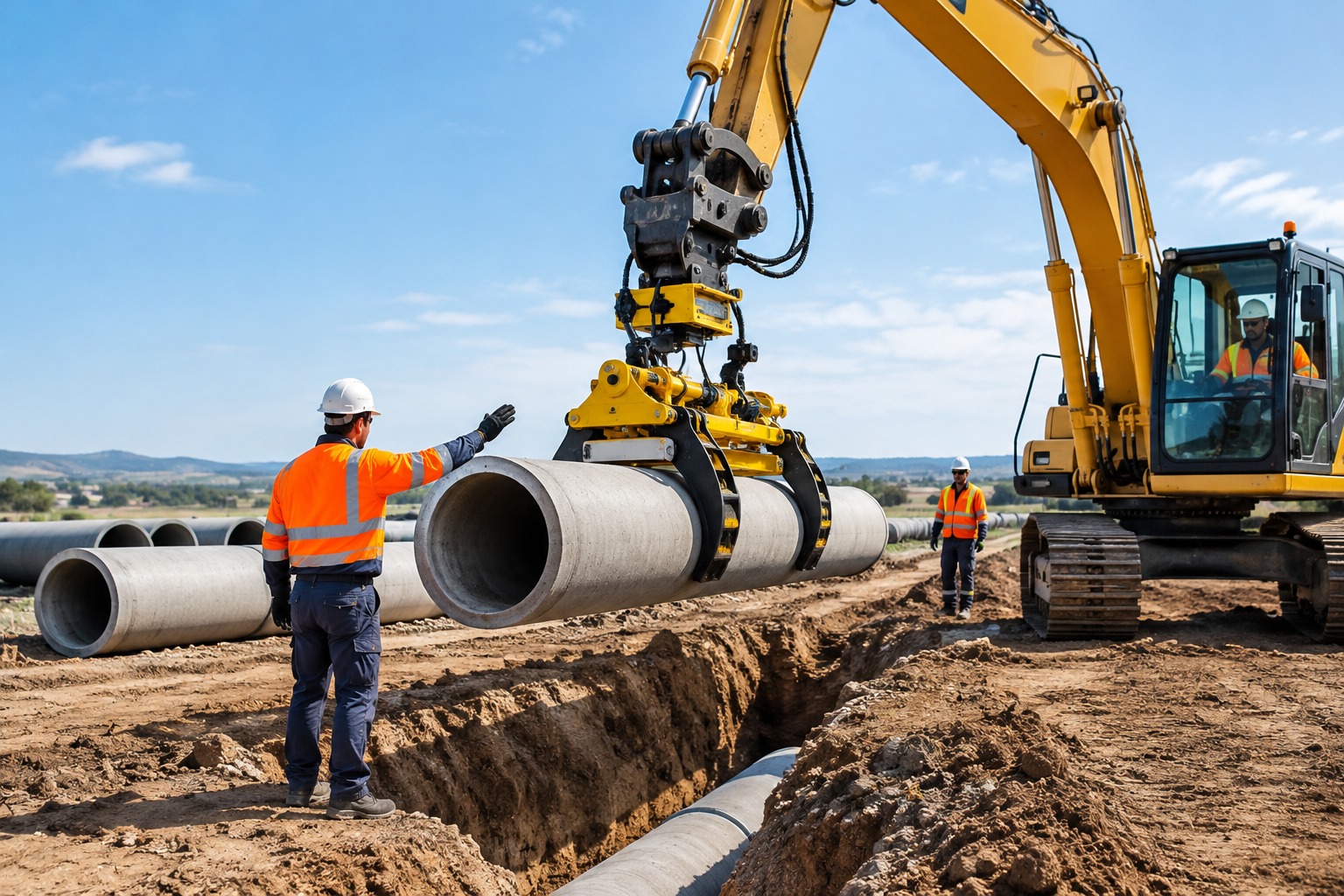
Moving and positioning large pipes safely is a major challenge on civil construction and pipeline installation sites. The right pipe handling equipment, effective lift planning and well-designed work procedures can help reduce manual handling risks, improve placement control and support more efficient construction workflows.
For Australian contractors working on water pipelines, sewer infrastructure, utilities, mining and civil construction projects, understanding how to handle pipes safely is essential for protecting workers and keeping projects on track.
In this guide, we explore common pipe handling risks, practical safety measures, mechanical pipe handling equipment and how to choose the right solution for your project.
Why Is Pipe Handling Safety Important in Australian Construction?
Pipe handling involves lifting, moving, lowering and aligning pipes during transportation and installation. Depending on the pipe's size, weight, material and installation environment, these activities can expose workers to significant hazards.
Common challenges include:
- Manual handling strain: Repeated lifting, pushing, pulling and awkward postures can contribute to musculoskeletal injuries.
- Crush and pinch hazards: Workers can be injured when pipes move unexpectedly or are positioned near trenches, machinery or other structures.
- Uncontrolled movement: Poor load control can make it difficult to position a pipe accurately.
- Restricted visibility: Operators may have limited visibility of the pipe, workers or placement area.
- Project delays: Difficult handling procedures can increase the time needed for positioning, alignment and rework.
Safe Work Australia identifies repetitive movement, high or sudden force, sustained force and awkward postures as risk factors associated with hazardous manual tasks. Businesses should assess these risks and implement suitable controls.
For construction businesses, pipe handling safety should therefore be considered during project planning—not only after work begins.
How Can You Improve Pipe Handling Safety During Pipeline Installation?
The most effective approach combines appropriate equipment, planned lifting procedures, trained operators and clear communication.
1. Assess Pipe Handling Risks Before Work Begins
Before selecting equipment, assess the actual work environment and the tasks involved.
Consider the pipe's dimensions, weight, material, centre of gravity and condition. Review the ground conditions, available working space, trench layout, nearby workers and machinery movements.
Ask these questions:
- Can the pipe be moved without workers manually supporting excessive loads?
- Is the lifting equipment suitable for the pipe and the intended operation?
- Can the operator see the load and the placement area?
- Are pinch points and potential crush zones identified?
- Is there a clear communication procedure between the operator and ground crew?
A task-specific risk assessment helps identify the appropriate controls before lifting or positioning begins.
2. Use Suitable Mechanical Pipe Handling Equipment
Manual handling can become particularly challenging when workers repeatedly move large or heavy pipes or position them in restricted spaces.
Mechanical pipe handling equipment can help reduce the need for workers to physically lift, support or reposition loads. Depending on the application, suitable equipment may also provide greater control during pipe placement.
A pipe handling attachment can be considered for projects where pipes need to be gripped, moved and positioned using compatible machinery.
When evaluating equipment, check:
- Rated capacity and permitted operating conditions
- Pipe diameter, material and shape compatibility
- Compatibility with the carrier machine
- Gripping method and load stability
- Operator visibility and control requirements
- Maintenance, inspection and training requirements
Mechanical equipment does not automatically eliminate every hazard. It must be correctly selected, installed, operated and maintained for the specific task.
3. Improve Control During Pipe Placement and Alignment
Pipe placement is not simply about lifting a load. The pipe may also need to be positioned accurately to meet the installation requirements.
During pipeline installation, poor alignment can create additional handling, adjustments and rework. Restricted visibility and difficult ground conditions can make accurate positioning more challenging.
Pipe alignment equipment and suitable positioning technology may help operators assess the pipe's location and make controlled adjustments, where the system is designed for that purpose.
Before choosing a pipe alignment tool or pipe handling attachment, confirm:
- What level of alignment accuracy the project requires
- Whether the equipment supports the intended pipe and installation method
- How the operator will monitor pipe position
- Whether additional surveying or alignment checks are required
- How the equipment performs under the expected site conditions
Always follow the engineering specifications and installation tolerances applicable to the project.
4. Establish Clear Exclusion Zones and Communication Procedures
Even with suitable mechanical pipe handling equipment, workers can remain exposed to hazards if they enter the load's movement path or stand in potential crush zones.
Establish a controlled work area before lifting begins. Keep unnecessary personnel away from the operating zone and agree on communication signals between operators and ground workers.
The site procedure should address:
- Who is authorised to direct the lifting operation
- How workers communicate with the machine operator
- Where workers must stand during movement
- How the load will be controlled if an unexpected situation occurs
- When the operation must stop
Workers should never rely solely on verbal instructions or assume that the operator can see them at all times.
5. Inspect Equipment and Train Operators
A pipe handling attachment must be appropriate for the intended load and maintained in a serviceable condition.
Before operation, inspect the equipment according to the manufacturer's instructions and site procedures. Check for visible damage, wear, loose components, defects or other issues that could affect safe operation.
Training should cover the equipment's intended use, limitations, controls, pre-start checks, emergency procedures and site-specific hazards.
Safe Work Australia's guidance on hazardous manual tasks also emphasises selecting suitable mechanical aids, maintaining them and providing appropriate instruction and training.
Manual Pipe Handling vs Mechanical Pipe Handling: What's the Difference?
Both approaches may be relevant in different situations. The correct method depends on the pipe, the task, the working environment and the available controls.
| Factor | Manual pipe handling | Mechanical pipe handling |
|---|---|---|
| Physical effort | Can require considerable worker effort, depending on the task | Can reduce the need for workers to physically support or move the load |
| Load control | Depends on the handling method and available assistance | Depends on equipment design, suitability and operator control |
| Repeated operations | May create repetitive handling demands | May improve workflow consistency for suitable repeated tasks |
| Positioning | Can be challenging with large pipes or restricted access | May assist controlled placement when properly selected |
| Equipment requirements | Requires suitable manual handling procedures and controls | Requires compatible equipment, inspections and trained operators |
| Main consideration | Assess physical demands and worker exposure | Assess capacity, compatibility, operating conditions and residual risks |
The objective is not to assume that one method is always suitable. It is to identify the hazards and choose the most effective controls for the work being undertaken.
How to Choose the Right Pipe Handling Equipment in Australia
Choosing the right pipe handling equipment begins with understanding the job—not simply comparing product features.
Consider the Pipe Specifications
Document the pipe's outside diameter, length, weight, material and any relevant surface or handling requirements. Confirm whether the proposed equipment is designed to handle those characteristics.
Check Excavator and Machine Compatibility
If you are considering an excavator pipe handling attachment, confirm the carrier machine's specifications, rated lifting capability, attachment interface and any required hydraulic or control connections. Never assume an attachment is compatible with every excavator or that the machine's nominal capacity is sufficient for every lifting configuration.
Evaluate Site Conditions
Consider trench access, ground stability, overhead obstructions, available operating space, proximity to workers and other equipment. The operating method must suit the actual site conditions.
Review Support and Maintenance
Ask about inspection requirements, servicing, spare parts, operator training and technical support. These factors can affect the long-term suitability of pipe installation equipment for your operations.
Discuss Your Application With the Supplier
Provide the supplier with accurate project information so the team can assess suitability and identify any limitations or additional requirements. For Australian contractors, this step is particularly useful when comparing pipe handling solutions for civil construction, water infrastructure, utilities or other pipeline projects.
How PIPEBOSS Can Support Pipe Handling Operations
PIPEBOSS focuses on pipe handling solutions intended to help operators move and position pipes with greater control. Its equipment may be relevant to contractors assessing mechanical alternatives to some manual pipe handling and positioning tasks.
When evaluating a PIPEBOSS pipe handling attachment, discuss your pipe specifications, machine compatibility, site conditions and alignment requirements with the team. These details help determine whether the equipment is suitable for your intended application.
The key is to select a solution based on the actual work requirements, supported by appropriate operating procedures, equipment checks and worker training.
Pipe Handling Safety Checklist for Site Supervisors
Before pipe movement or installation begins, use this checklist as a starting point for your site's approved procedures.
This checklist does not replace a site-specific risk assessment, lift plan or the manufacturer's operating instructions.
Frequently Asked Questions About Pipe Handling Equipment
Final Thoughts: Improve Pipe Handling With the Right Equipment and Planning
Safe and efficient pipeline installation requires more than lifting a pipe from one location to another. Contractors need to assess manual handling risks, select suitable equipment, maintain clear communication and ensure workers understand the operating procedures.
For projects involving repeated pipe movement or challenging placement tasks, mechanical pipe handling equipment may offer a practical way to reduce physical handling demands and improve control.
If you are reviewing your current pipe installation process, start by identifying the main handling challenges and the controls that could address them. Then evaluate equipment options against your project's actual requirements.
Planning a pipeline installation project? Contact PIPEBOSS or Request a Demo to discuss your pipe handling application, equipment compatibility and project requirements.
Need Safer Pipe Handling Solutions?
Discuss your project requirements, pipe dimensions and machine compatibility with the PIPEBOSS team.